

ReliGraft
Saving time and enhancing precision.
ReliGraft is a versatile synthetic bone graft renowned for its exceptional handling characteristics, saving valuable time and enhancing placement precision. It’s specially formulated consistency allows for easy packing into voids of any size or shape without sticking to surgical gloves.
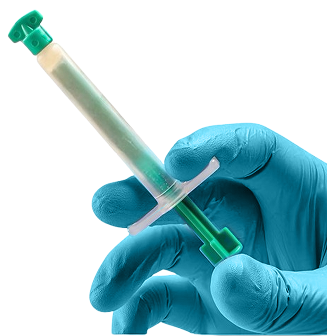
Properties:
Pre-mixed and ready for immediate use — no preparation needed before application to the graft site
Maintains position during irrigation, minimizing the risk of displacement
Non-sticky formulation prevents adhesion to surgical gloves
Extremely pliable — simple to shape, mold, and pack directly into defects of any size
Acts as a resorbable bone void filler, gradually replaced by natural bone throughout the healing process
Indications:
Indicated for the treatment of bone voids or gaps that are not essential to the structural integrity of the bone
Indicated for gentle packing into bone defects or voids within the skeletal system, including the extremities, posterolateral spine, pelvis, and intervertebral disc spaces
Indicated for use in osseous defects that result from surgical procedures or traumatic injury to the bone
FAQs
-
Bioactive glasses are a group of surface reactive glass-ceramic biomaterials and include the original bioactive glass, Bioglass.
The biocompatibility and bioactivity of these glasses has led them to be used as implant devices in the human body to repair and replace diseased or damaged bones.
Most bioactive glasses are silicate-based glasses that are degradable in body fluids and can act as a vehicle for delivering ions beneficial for healing.
Bioactive glass is differentiated from other synthetic bone grafting biomaterials (e.g., hydroxyapatite, biphasic calcium phosphate, calcium sulfate, etc.), in that it is the only one with anti-infective and angiogenic properties.
-
The carrier resorbs in approximately 15 days from implantation leaving the graft in place as a lattice for bone growth. The open architecture of the graft mimics the porosity of bone.
-
Bioglass is a type of bioactive glass that resorb into hydroxycarbonate when it comes into contact with body fluids, such as an aqueous solution. This process is called hydrolysis and it breaks down the silica matrix in the bioglass, forming silanol and Si(OH)4. The resulting gel layer that forms on the surface of the bioglass is similar to hydroxyapatite, which can help differentiate osteoblasts and encourage new bone growth.
-
Generally speaking, Osteo Integration should take place between 9 and 15 months from implantation. Factors may include vascularity at the implantation site and general health of the patient.
-
No. Posterior migration is neither a concern nor is it likely.
When placed as a superior on-lay, the graft’s irrigation-resistant composition ensures its placement in and around the void it’s filling.
Additionally, in the off chance the graft is placed inferior to the corresponding sternal closure solution (plate, etc.), bioglass has not been shown to adversely augment nor affect normal function of the adjacent organs.
-
The shelf life of Thorafix CT is 3 years.
